
Review · ABISKO
Abisko: Guided Aurora Chase with Hotel Transfers
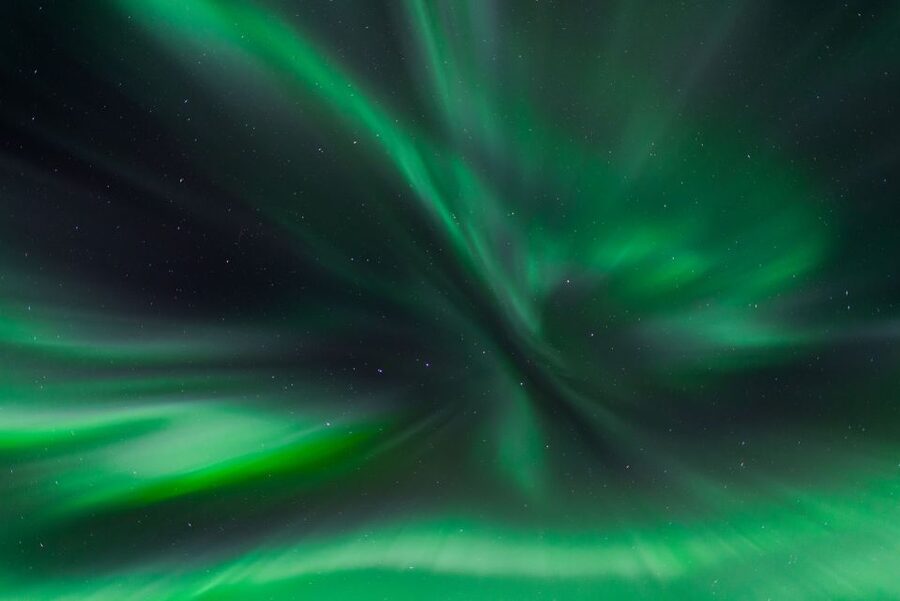
The clever part of this Abisko outing is that you do not simply wait in one place and hope the sky cooperates. Your guide checks the clouds and aurora forecast during the evening, then may drive as far as 100 kilometers roundtrip to find a clearer patch of sky. I like that flexible approach, and I also like the warm drink, fire stops, and practical help with camera settings. The one catch is simple: the northern lights remain weather-dependent, and a chase can end with only faint lights or none at all.
The strongest guides, especially Joey and Romy, add real value. They keep checking conditions, help with photos, and know that the best viewing spot may be beside a frozen lake, a river, or simply a dark roadside clearing. Bring serious winter clothing, though. The bus is warm, but you will spend time outside, sometimes walking in the dark.
Key points to know before you book
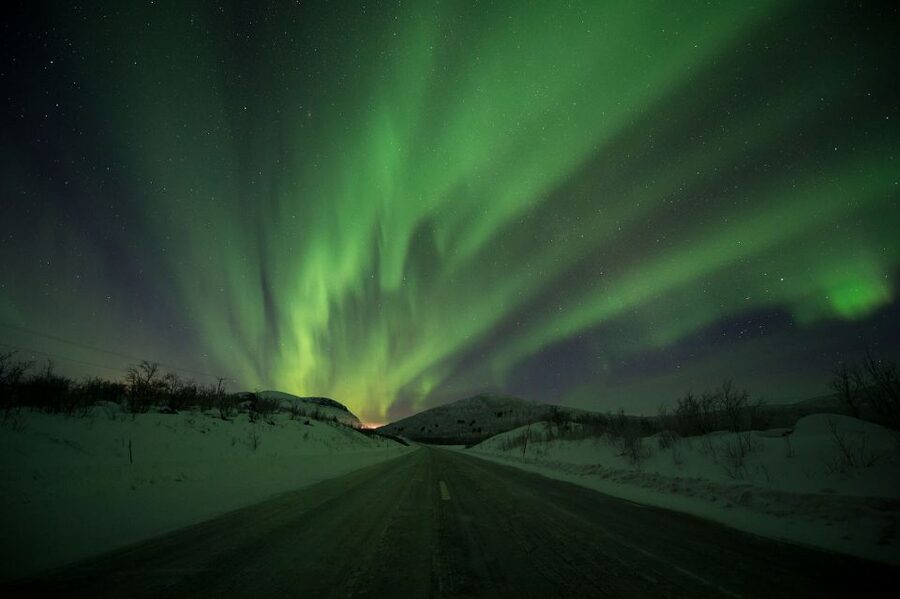
- Up to 100 kilometers of aurora chasing: The route changes with cloud cover, forecasts, and visible activity.
- Pickup from Abisko and Björkliden hotels: Collection is available from five listed locations, but not from Kiruna.
- Three and a half hours outside: The 210-minute outing leaves time for several viewing attempts rather than one quick stop.
- Joey and Romy are frequently praised guides: They help with photography, explain the aurora, and keep the group focused in cold conditions.
- Fire, fika, and warm drinks may be part of the night: Expect tea or lingonberry juice, cookies or crackers, and sometimes marshmallows.
- No guarantee of strong auroras: Even a skilled guide cannot control cloud, snow, moonlight, or solar activity.
Why this Abisko aurora chase works differently
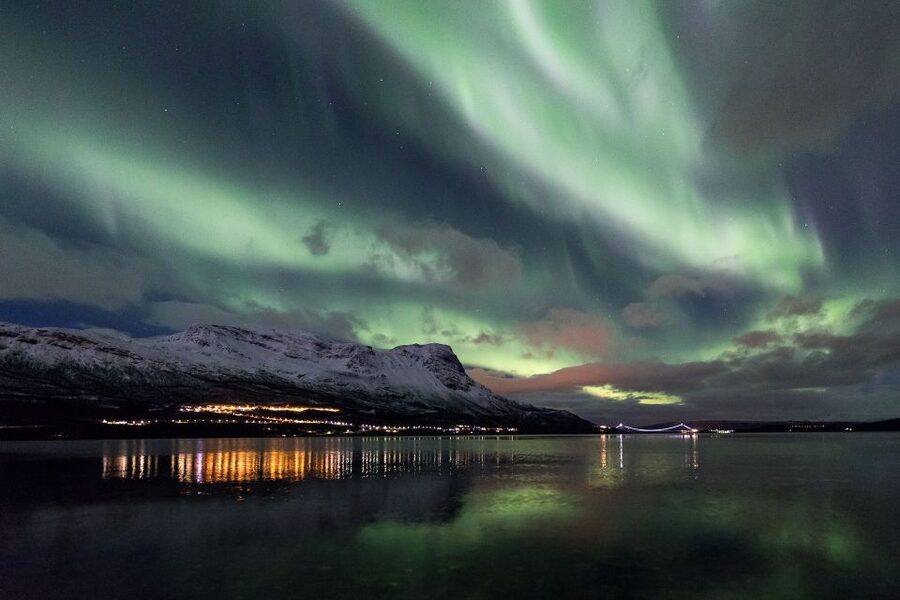
A fixed viewing spot is easy to organize, but it can be a poor choice when clouds roll in. This tour uses mobility as its main advantage. After pickup, the guide looks at local weather and aurora forecasts, then chooses among several proven viewing areas around Abisko National Park.
That might mean staying close to Abisko if the sky is clear. It might also mean driving farther toward another opening in the clouds. Past outings have reached Kiruna when conditions required it, though the advertised plan describes a maximum of 100 kilometers roundtrip. You should see that flexibility as a useful tool, not as a promise of a spectacular show.
The famous Abisko blue hole effect is part of the appeal. Local weather can sometimes leave a clearer patch over Abisko while nearby areas are cloudy. A guide who understands these small changes has a better chance of finding visible stars and auroras than you would have by standing outside your hotel and checking one forecast.
The outing lasts 210 minutes, or three and a half hours. That is long enough to try several locations and warm up between stops, without turning the night into an exhausting expedition. The exact number of stops varies. Some nights produce visits to four or five places, while another evening may focus on one excellent opening in the sky.
More Aurora Chases around Sweden:
- Kiruna Northern Lights Tour with Photographer
★ 5.0 · 735 reviews - The Ultimate Aurora Photo Adventure
★ 5.0 · 514 reviews - From Kiruna: Abisko National Park Northern Lights Tour
★ 4.4 · 462 reviews
Starting at five pickup points
Pickup is arranged from selected accommodation in Abisko and Björkliden. The listed locations are Abisko Mountain Lodge, Abisko Fjällturer, Abisko Guesthouse, STF Abisko Turiststation, and Hotell Fjället, also called Kåppas Cabin in the pickup information.
The schedule begins at 8:00 PM from Björkliden Hotell Fjället and Kåppas Cabin. Pickup from the Abisko locations generally falls around 8:15 to 8:30 PM. Exact timing matters in a small mountain community, so you should be ready at your accommodation rather than assuming the vehicle will wait while you finish dinner.
There is no pickup from Kiruna. That is an important planning detail. If you are staying in Kiruna, you cannot simply add this activity to your booking without arranging your own way to an Abisko pickup point. The tour is designed for people based in Abisko or Björkliden.
The return uses the same five general locations. Transportation is included, and the vehicle has received praise for being warm and comfortable. That matters more than it may sound. An aurora chase involves standing still in winter darkness, so a heated bus gives you a useful reset between viewing attempts.
The drive through Abisko National Park
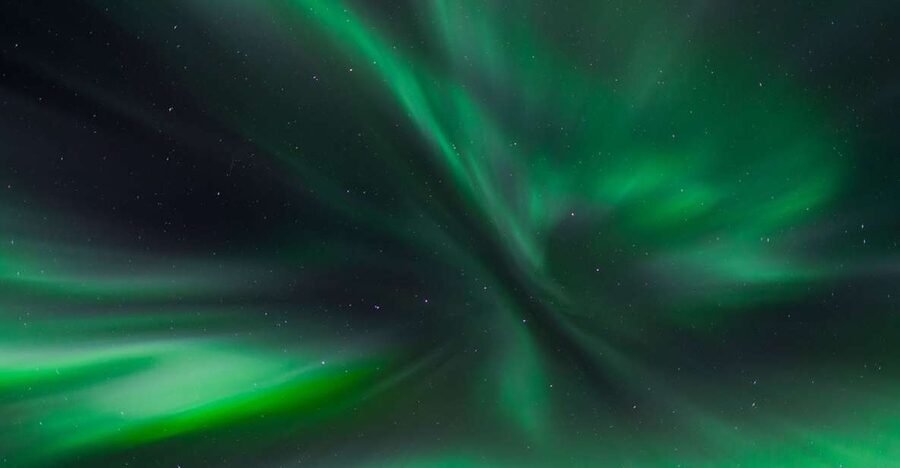
Once everyone is collected, the guide explains the plan and begins reading the evening conditions. You get scenic views during the drive, along with a sightseeing element connected to Abisko National Park.
This is not a standard sightseeing bus tour with a fixed commentary at every bend. The main purpose is finding the aurora, so the route can change as clouds and activity shift. Still, the drive gives the evening a sense of place, and the guide talks about Abisko, the national park, and the science behind the northern lights.
Guide quality makes a difference here. Joey appears often among the strongest guide experiences, helping people set up cameras, taking photographs with her own camera, and sharing the finished images with the group. Romy is also praised for her enthusiasm and for keeping spirits high during cold or uncertain conditions. Other guides, including Burk, Gavin, and the named drivers, have also been part of well-received evenings.
You should not expect a private tour. The group can be large enough that people need to stay together and pay attention when moving between the bus and a viewing spot. One person reported being briefly left behind at a stop and having difficulty finding the trail in the dark. That is an unusual but useful warning: keep close to the guide, carry your own light, and do not wander off while others are moving.
What happens at the viewing stops
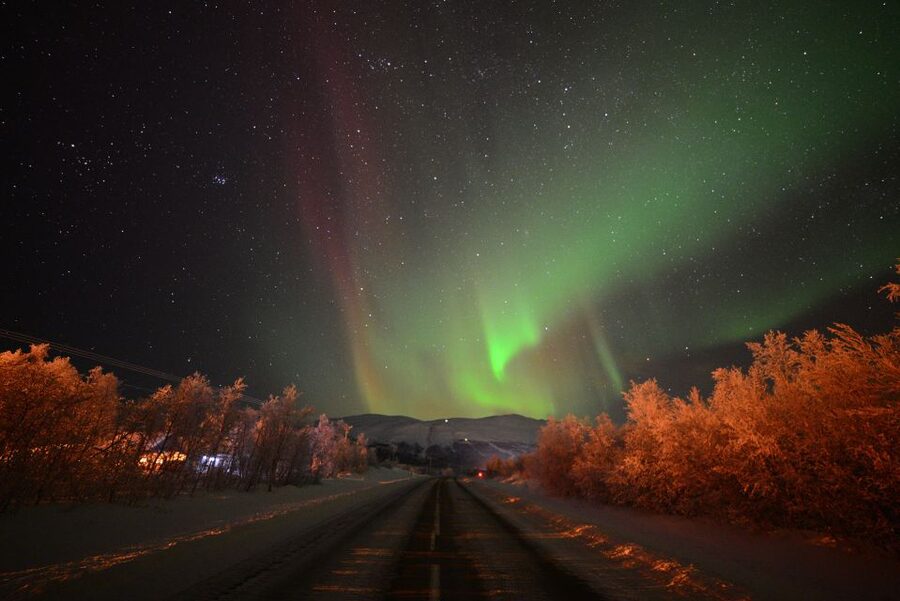
The viewing areas are chosen for darkness and a clear view of the sky. Several are near lakes or rivers. In winter, polished ice can reflect the aurora, giving you lights above and below. That reflection can make a modest display look more impressive in photographs, though the effect depends on ice, wind, cloud, and the angle of the lights.
The group may stop several times. At one location, the aurora might be faint but visible. At another, the guide may find a stronger opening. On one well-received evening, the group saw lights at three separate points. On another, the route reached five locations despite a poor aurora forecast.
This is where the chase format earns its price. You are paying for transport, local judgment, and the chance to move toward better conditions, not for a guaranteed performance. If the first stop is cloudy, the guide can assess another area rather than simply ending the night beside the first parking place.
The drawback is that every extra drive takes time away from standing under the sky. A long route can also mean more time getting in and out of winter clothing. If you prefer to settle into one quiet location beside a fire, a fixed camp experience may suit you better. If you want the best possible odds on a changeable night, mobility is more useful.
Same sky, a different way out:
- Kiruna: Northern Lights Tour with Photos
★ 4.9 · 333 reviews - Northern Lights Tour from Kiruna to Abisko with Dinner
★ 5.0 · 311 reviews - Kiruna: Northern Lights Tour with Stejk Street Food Dinner
★ 4.9 · 231 reviews - Kiruna: Aurora Wayfinding with Hidden Histories
★ 4.6 · 203 reviews
Fires, fika, and staying warm
The included hot drink gives the outing a welcome Swedish touch. Depending on the evening, that may be tea, warm lingonberry juice, or another hot refreshment. Cookies, crackers, gingerbread, and marshmallows have also been served on different outings.
Some stops include an open fire, described by participants as Arctic fire or fika beside the flames. Fika is not just a drink break. It gives the night a social pause, lets you warm your hands, and makes a cloudy evening feel worthwhile even if the aurora is weak.
Do not mistake the fire and hot drink for full winter equipment. Warm clothing is not included. Wear insulated layers, a proper winter coat, warm socks, gloves or mittens, and a hat. The supplied information specifically tells you to bring warm clothing, and you should take that instruction seriously.
You may also want a head torch or small flashlight. One outing involved longer walks in very dark conditions, and head torches were not supplied. Use a red-light setting if your torch has one, since bright white light can disturb other people’s night vision and spoil photographs.
Photography help is a major bonus
You do not need professional camera equipment to attend, but you should not expect camera equipment to be supplied. The activity includes no camera rental. Bring your own camera, tripod, and spare batteries if you want serious night-sky photographs.
The guides can still help you get more from whatever you bring. Joey is particularly valued for showing people how to set up their cameras and for taking portraits with her own camera. Images have been shared with the group afterward on several occasions, which is a useful extra for anyone who wants a proper photograph beneath the lights.
A phone may record a faint aurora that your eyes barely detect, especially when the guide points out where to look. With a camera, you can often capture the Milky Way and more color than is obvious at first glance. But keep expectations sensible: a camera can brighten a faint display, not create one that is absent.
The guide may take photos for everyone, so be patient and organized. Have your coat, hat, and pose ready rather than asking for a full photo session while the group waits. If you are traveling with friends or family, decide in advance who wants individual pictures and who wants group shots.
The weather problem you cannot solve
Northern lights tours always carry risk. Cloud cover, snowfall, weak solar activity, and a bright moon can all reduce what you see. Several successful evenings happened during poor forecasts because the guide found gaps in the clouds. Other outings produced only faint aurora or none at all, despite careful driving.
That is not a flaw in this particular activity. It is the basic bargain of aurora watching. A good guide can read forecasts, compare conditions, and find a better opening. No guide can order the aurora to appear.
The most useful attitude is to treat the chase as a well-planned attempt, not a guaranteed show. On a clear night with active aurora, the experience can be extraordinary. On a cloudy night, the fire, views, stories, photography tips, and warm vehicle may become the main rewards.
The full moon is not automatically a deal breaker either. One outing produced visible aurora during a full moon, though moonlight can make faint colors harder to see and can reduce the contrast in photographs. Clear skies remain the more important factor.
Is $109 a fair price?
At $109 per person, the tour is not the cheapest way to stand outside in the dark. It offers more than that, though. The price includes a guide, transportation, hotel pickup and return, and a hot drink. You are also paying for a vehicle that can cover up to 100 kilometers roundtrip and for local decisions about where to look.
The value is strongest if you do not have a car, do not know the area, or want help with photography. Renting a vehicle would add its own cost and responsibility, while driving unfamiliar snowy roads at night may not be appealing. The included transport also lets you warm up between stops.
The value is less clear if you already have private transport, strong aurora knowledge, and a favorite dark-sky location. In that case, you may prefer to go independently and accept the weather risk yourself.
For most visitors staying in Abisko, the combination of mobility and local guiding makes the price reasonable. The chance to move away from cloud cover is the main reason to choose this outing over simply walking outside your hotel.
Who will enjoy this outing most?
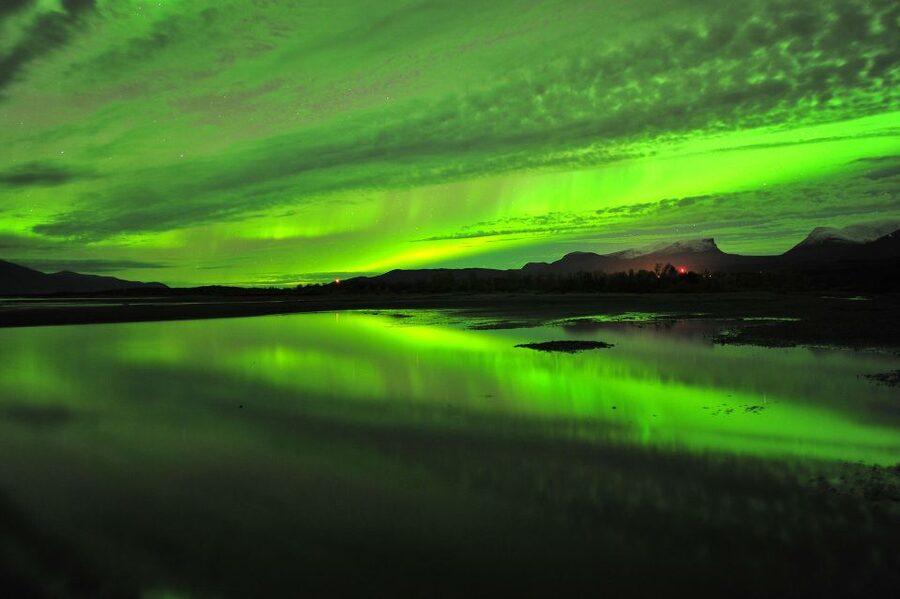
I would choose this tour if you have one or two nights in Abisko and want to give yourself a serious chance of seeing the northern lights. It also suits solo visitors, couples, and families with children aged five and older who are comfortable outdoors in winter.
Photography beginners will get extra help from guides such as Joey and Romy. Experienced photographers should bring their own equipment and remember that a group outing cannot be planned entirely around one person’s camera setup.
The tour is less suitable for anyone who dislikes cold, darkness, vehicle transfers, or uncertain results. It is also not suitable for children under five. Anyone with limited mobility should ask the operator for current details before booking, since the evening can include walking between the vehicle and viewing areas, and no accessibility information is provided here.
Free cancellation is available up to 24 hours before departure, and you can reserve now and pay later. Those policies are handy when the weather forecast is still changing, although they do not remove the need to dress properly or plan your pickup carefully.
Should you book the Abisko Aurora Chase?
Book it if you want a flexible search rather than a single viewing point. The ability to follow clearer skies, combined with warm transport and helpful guides, gives you a sensible advantage on a changeable night.
I would be especially happy to book this for a short stay in Abisko, when you may not have another evening to try. I would also book it if photographs matter to me, since the guides have repeatedly helped with camera setup and taken group pictures.
Just keep the promise honest. You are buying a guided attempt, not a guaranteed aurora. Bring winter clothing, stay with the group in the dark, and accept that clouds may win. With that understanding, the $109 price is fair, and the combination of local judgment, transportation, fire, fika, and photography help makes this one of the more practical ways to chase the lights around Abisko.
FAQ
How long does the Abisko aurora chase last?
The activity lasts 210 minutes, or three and a half hours.
Where can I be picked up?
Pickup is available from Abisko Mountain Lodge, Abisko Fjällturer, Abisko Guesthouse, STF Abisko Turiststation, and Hotell Fjället in Björkliden.
Does the tour pick up from Kiruna?
No. Pickup from Kiruna is not available.
How far can the guide drive during the chase?
The evening route can cover up to 100 kilometers roundtrip while searching for clearer skies and stronger aurora activity.
Is photography equipment included?
No. Camera equipment is not included. Guides may help with camera settings and may take photographs with their own cameras, but you should bring your own equipment if you want to take pictures.
Can children join the tour?
Children under five are not permitted. The provided information does not set a maximum age, but all participants should bring warm clothing for time outside.
Fresh aurora departures around Sweden
- Premium Aurora Snowmobile Ride With Panoramic Views★ 4.9 · 42 reviews
- Kiruna: Northern Lights Snowmobile Tour★ 4.9 · 50 reviews
- Kiruna: Northern Lights Tour with Stejk Street Food Dinner★ 4.9 · 231 reviews
- Lulea: Northern Lights Hunt by Car with Transfer★ 4.4 · 56 reviews
- Luleå : Northern lights snowmobile tour★ 4.6 · 20 reviews
- Luleå: Northern Lights Tour by Car with Swedish Treats★ 4.7 · 43 reviews
- Abisko: Aurora Car Chasing Tour with Photographer★ 4.8 · 60 reviews
- Luleå : Northern Lights Tour on a Snowmobile drawn Sled★ 3.8 · 23 reviews
Abisko Northern Lights Tours, compared.
Guided Autumn Aurora Chase with Hotel Transfers
Read our review →
Browse the lists this tour appears in