
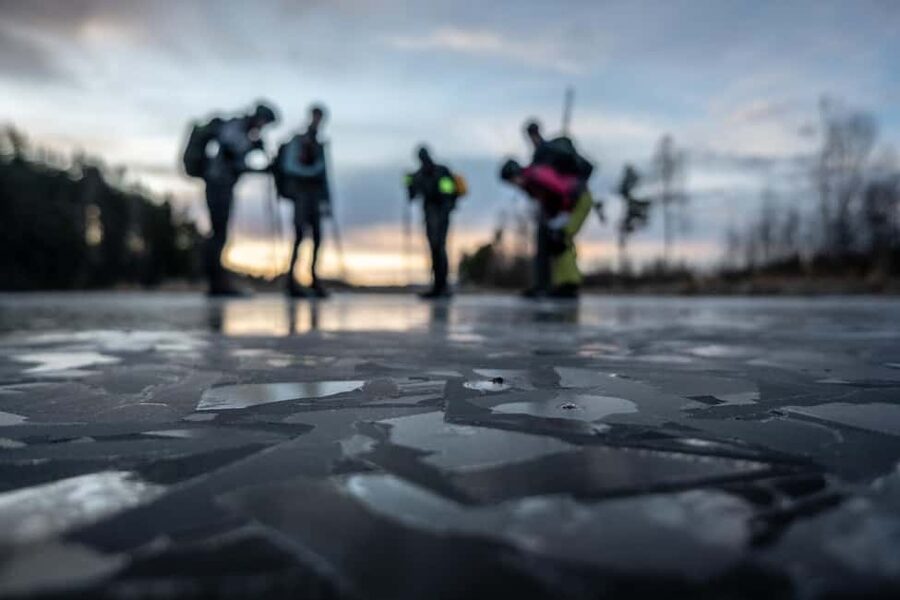
Review · SWEDEN
Stockholm: Ice Skating with fire & chance of Northern Lights
The best part of this Stockholm outing is the strange, quiet pleasure of skating across a frozen lake at night, with firelit torches marking the route and only the moon, stars, and ice for company. It feels far removed from city sightseeing, even though you start close to central Stockholm.
I like the freedom to skate at your own pace after the first guided lap, and I like the small groups, with no more than eight people per guide. The warm meal, hot drinks, and campfire give the evening a welcome second act. The main drawback is simple: Northern Lights and safe natural ice are never guaranteed.
Key points to know
- Torchlit natural-ice skating: Your guide checks the conditions and sets the first course before you skate on your own.
- A genuinely small group: The limit is eight people per guide, with an average of three to six.
- Campfire food and fika: Warm soup or another hearty meal, bread, hot drinks, and a Swedish pastry or cookie help take the chill off.
- Good equipment included: Skates, boots, poles, ice picks, backpack, helmet, knee pads, and elbow pads are provided.
- Northern Lights are only a possibility: The setting is right for stargazing, but clear skies and Aurora Borealis cannot be arranged.
- A short evening escape: The whole outing lasts 3.5 hours, including transport from the meeting point.
Skating across a frozen lake by torchlight
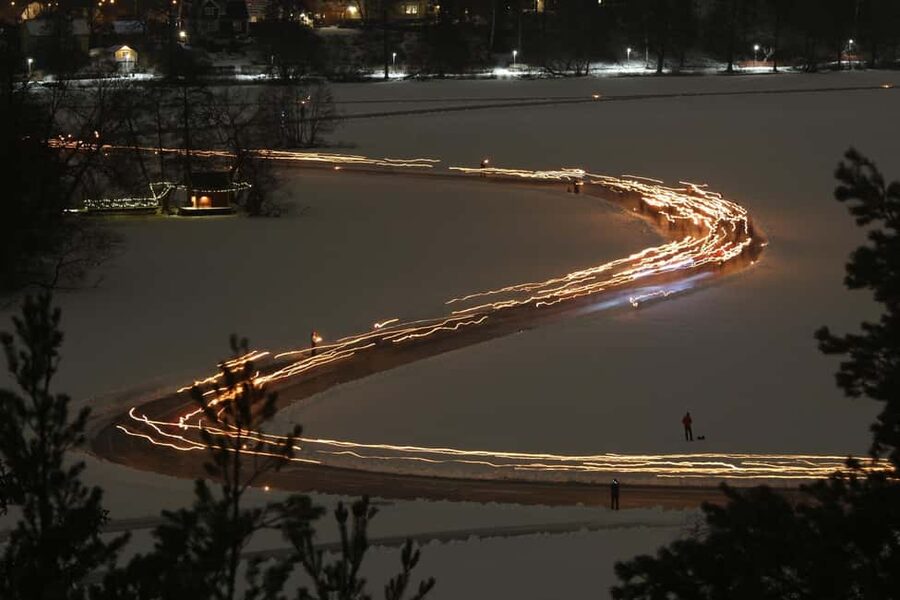
Natural-ice skating is the star here, not a polished indoor rink with music and painted boards. You follow a course marked by firelit torches, glide under the night sky, and get a sense of how much open space a frozen lake can hold.
The first lap is done with your guide. This is not just a warm-up. The guide uses that lap to assess the ice and decide the safest course for the evening. That matters because natural ice changes from lake to lake and day to day.
After that first circuit, you are free to skate at your own pace. You can take several laps, stop for advice, or slow down and enjoy the setting. If you prefer instruction, your guide remains nearby to offer skating tips and help you one on one.
I like this format more than a tightly managed group procession. You are not required to stay shoulder to shoulder with the whole group for the full outing. Stronger skaters can make better use of the time, while beginners can take it slowly.
Still, do not mistake the relaxed format for an easy activity. One person described the skating as more difficult than it first appears, but also great fun. You need enough balance and energy to skate outdoors on natural ice, often in winter clothing and boots that feel less nimble than ordinary rink gear.
More Aurora Chases around Sweden:
- Kiruna Northern Lights Tour with Photographer
★ 5.0 · 735 reviews - The Ultimate Aurora Photo Adventure
★ 5.0 · 514 reviews - From Kiruna: Abisko National Park Northern Lights Tour
★ 4.4 · 462 reviews
Why the small group makes a difference
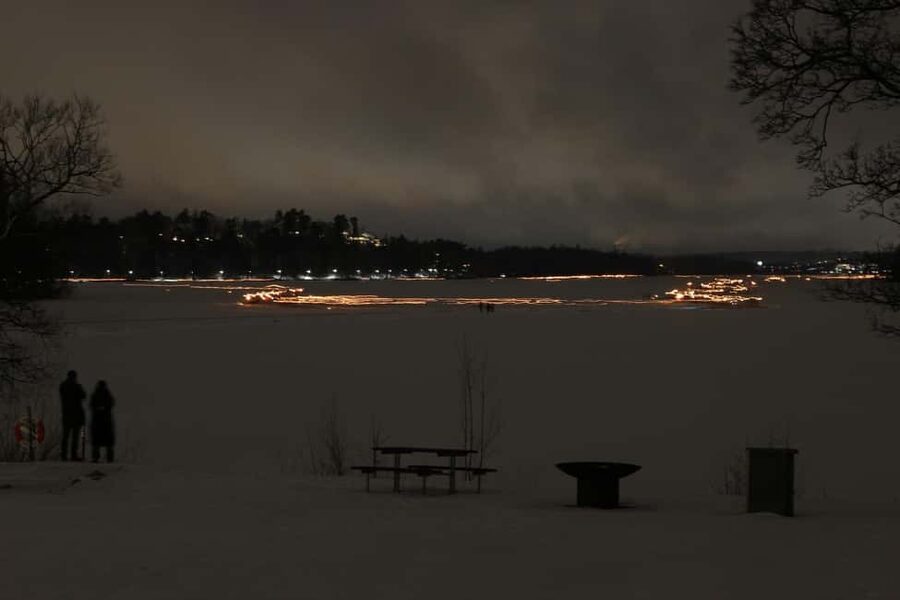
The group limit is eight people per guide, with the usual ratio closer to three to six. That is a real advantage on an active outing. The guide can watch how you skate, adjust the pace, and answer questions without trying to manage a crowd.
The small size also helps with the mood. A torchlit lake is at its best when it is quiet. A large group would bring more waiting, more noise, and more pressure to move at someone else’s speed.
Guide Magnus has received especially warm praise for making people feel safe, explaining the activity clearly, and sharing information about Stockholm. If he is leading your departure, expect a guide who takes both the practical and social side of the outing seriously.
The guides also judge the ice before setting the route. You should listen closely during that first lap and follow their instructions. Natural ice requires more care than a rink, and the activity provider asks you to accept responsibility for accidents during the trip.
The first stage: transport from Södermalm
The meeting point is about a 10-minute walk from both Skanstull metro station on the green line and Mariatorget metro station on the red line. Stockholm Södra commuter rail station is about an eight-minute walk away.
From there, a minibus takes you to the lake or lakes selected for the evening. The exact lake is not given in advance because the guide chooses the best available conditions and forecast. That flexibility is useful, since the best place for safe ice and clear skies can change.
The short city walk is easy to build into your plans, but allow enough time to find the meeting point without rushing. You will want to arrive wearing your base layers and winter clothing, since the outing begins with transport and ends outdoors.
The minibus transfer is included in the $154 price. That saves you from arranging transport into the countryside and trying to work out where skating conditions are good. It also means the evening remains fairly simple: meet in the city, ride out, skate, eat, and return.
Safety gear that makes the outing more approachable
The equipment package is unusually broad. You receive skates and boots, poles, ice picks, a backpack, a helmet, knee pads, and elbow pads. Knee and elbow protection is listed as new for 2024.
The ice picks and poles are not decorative extras. They are part of the kit used for Nordic skating on natural ice. The helmet and pads also make this a more approachable choice for people who are willing to try something new but do not want to bring specialized gear.
You do need to bring your own clothes. The provider recommends breathable layers that dry quickly, with wool and polyester preferred over cotton. Pack an extra layer for the break, since you may cool down quickly once you stop moving.
Bring your own gloves, hat, socks, and winter clothing. Gloves matter especially here because you will be outdoors for several hours and will want warm hands both on the ice and beside the fire.
A dry bag is included for small personal items such as spare gloves or a camera. It is a useful detail, since you do not want a phone or extra clothing exposed to snow, moisture, or a fall.
Same sky, a different way out:
- Kiruna: Northern Lights Tour with Photos
★ 4.9 · 333 reviews - Abisko: Guided Aurora Chase with Hotel Transfers
★ 4.5 · 311 reviews - Northern Lights Tour from Kiruna to Abisko with Dinner
★ 5.0 · 311 reviews - Kiruna: Northern Lights Tour with Stejk Street Food Dinner
★ 4.9 · 231 reviews
A campfire, warm food, and Swedish fika
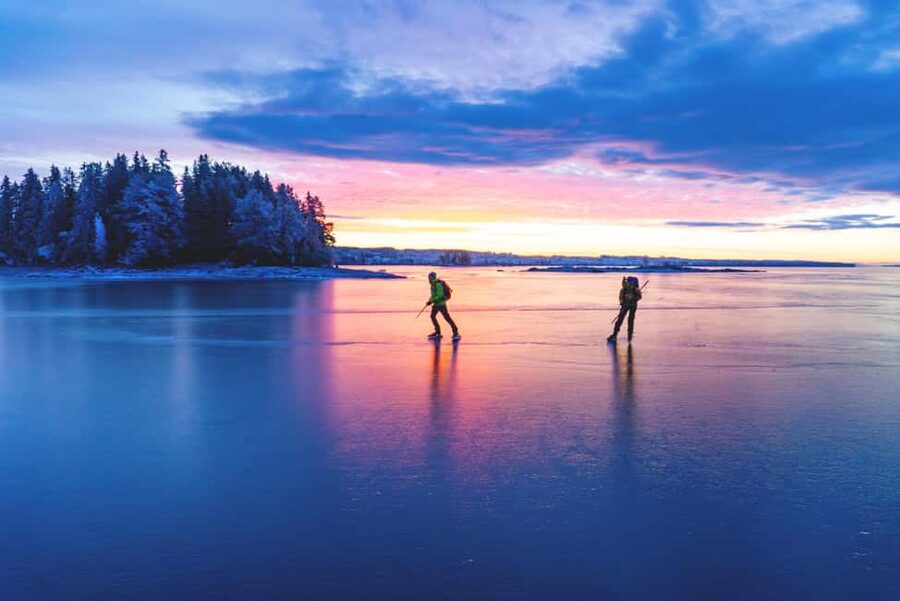
The evening does not end when you step off the ice. The group gathers around a fire for warmth, food, and hot drinks. That break changes the pace from active skating to a slower winter gathering.
The meal is described as a warm and filling lunch or dinner, depending on the tour timing. The food served has included goulash with bread and a comforting soup. It is practical outdoor food rather than a formal restaurant meal, which suits the setting.
You also receive Swedish fika, traditionally a pastry or cookie with tea or hot chocolate. Glögg has been served as well, and it makes a fitting winter drink after skating. The hot drinks are not a minor extra. After an hour or more on a frozen lake, they are part of what makes the evening feel complete.
I would not book this excursion for the food alone, but the meal improves the value of the package. You are paying for transport, equipment, instruction, a small group, and a hot meal in addition to the skating. At $154 per person, those inclusions help justify the cost, especially if you would otherwise need to rent gear and arrange transport yourself.
Moonlight and Northern Lights: keep the promise realistic
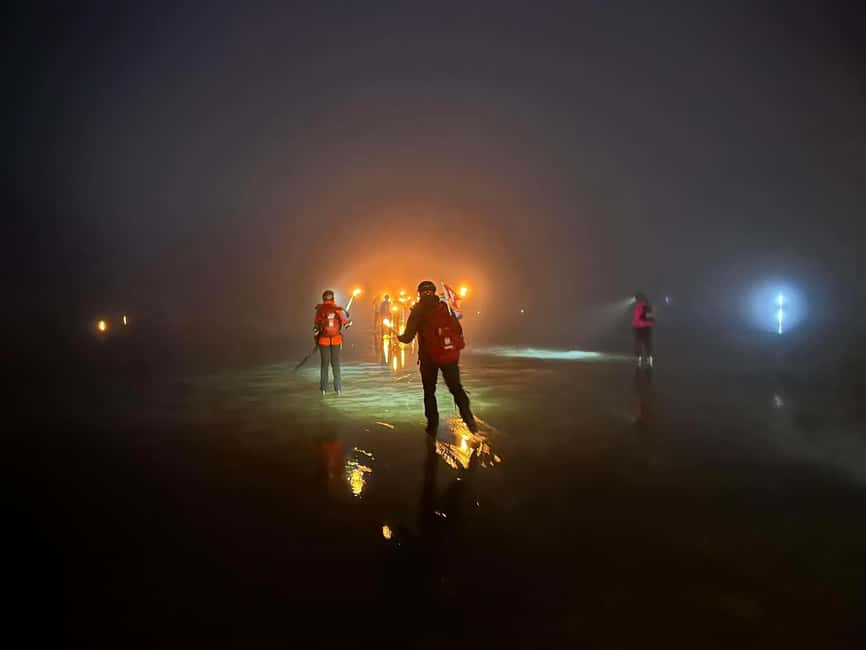
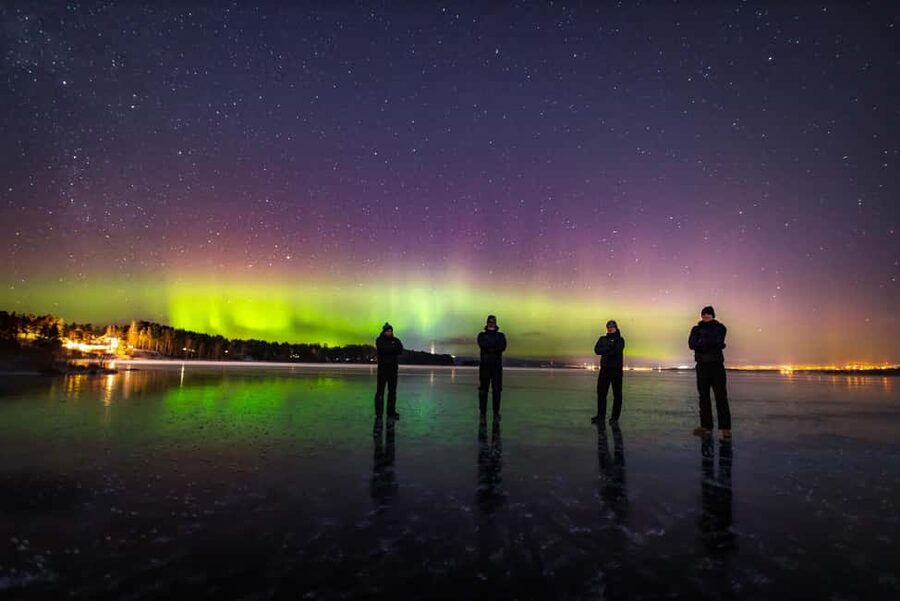
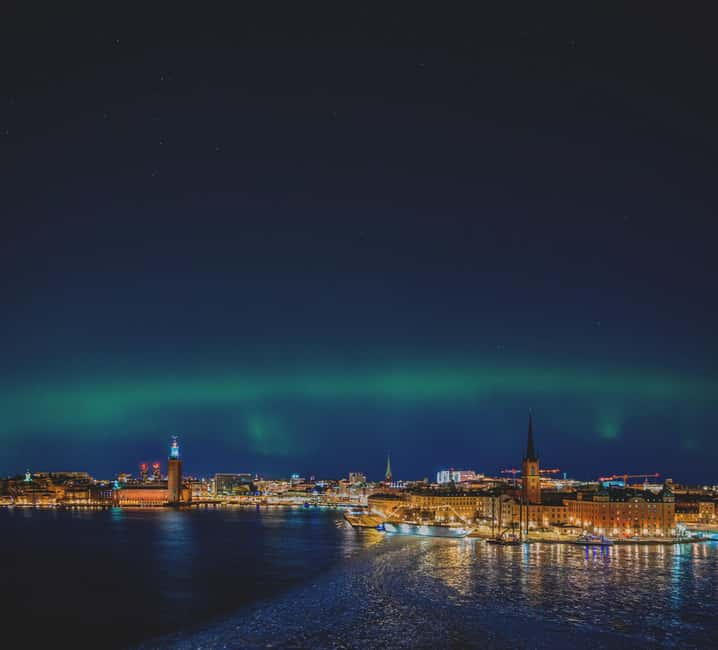
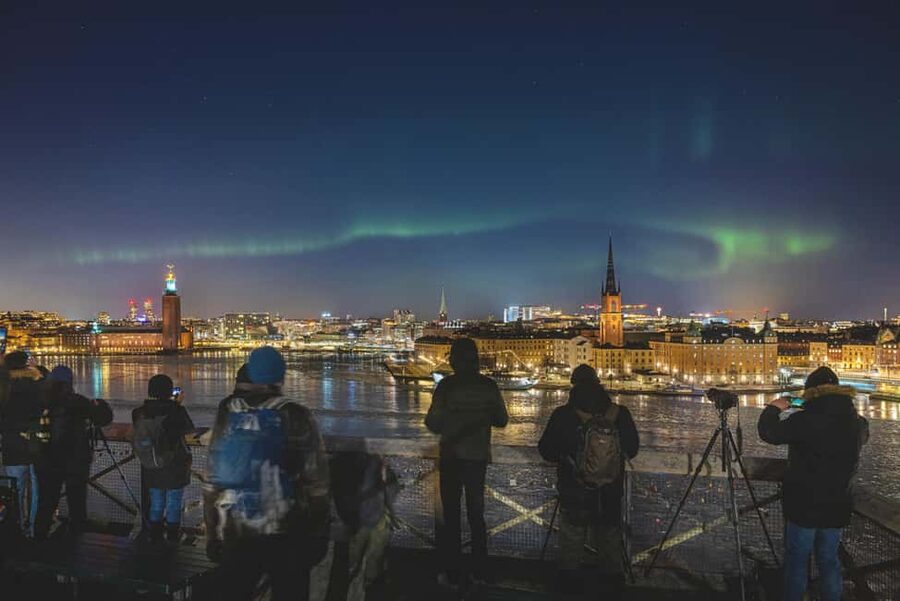
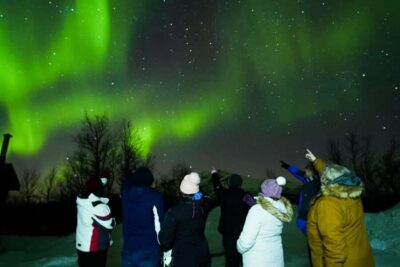
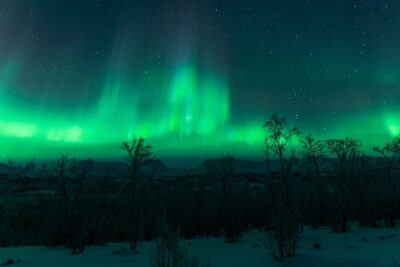
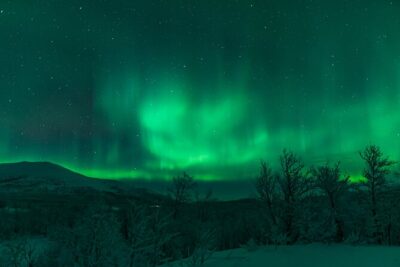
The tour is designed around winter scenery, but the Aurora Borealis is a bonus rather than the main event. You might see the Northern Lights if the forecast, solar activity, and cloud cover cooperate. You might also get a clear moon, a field of stars, or a cloudy night with torches doing most of the work.
The company takes the group to the place with the best forecast at the time. That is sensible, but it cannot control natural conditions. There is no promise of an aurora, a cloudless sky, or a large bright moon.
I recommend setting your expectations this way: book for the skating, the fire, and the winter setting. Treat the Northern Lights as a lucky extra. One person gave exactly this practical advice: enjoy the activity without getting your hopes too high for the aurora.
Even without the lights, the torchlit route creates its own visual effect. The fire marks the way across the dark ice, and the pauses at the campfire give you time to look up. The experience does not depend on a perfect postcard sky.
What happens if the ice is not safe
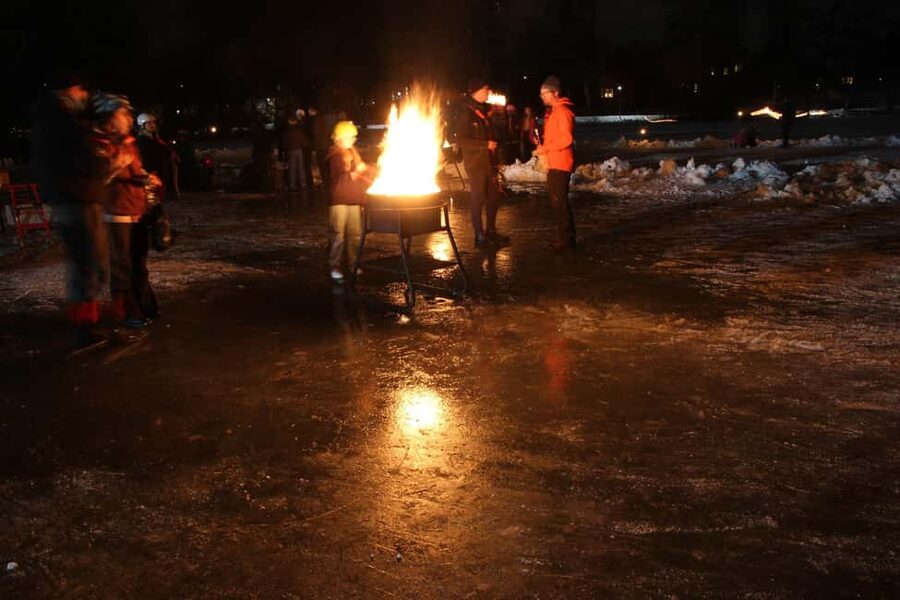
There is no ice guarantee. Weather conditions are outside the operator’s control, and a safe skating route may not be available on your date.
If the ice is unsafe, the provider aims to arrange an alternative activity, most likely a winter hike, with your approval. If that does not work for you, a refund is offered. You do not need to contact the company ahead of time to check the ice conditions.
That policy is important to understand before you book. If your entire Stockholm plan depends on skating on a frozen lake, leave room for a change. The company reports that it managed to skate on every excursion during the previous winter season, but that past record cannot guarantee your date.
The first guided lap also shows why the safety check matters. The route is not simply a fixed track waiting for you. The guide studies the conditions and chooses the course for that evening.
How difficult is the skating?
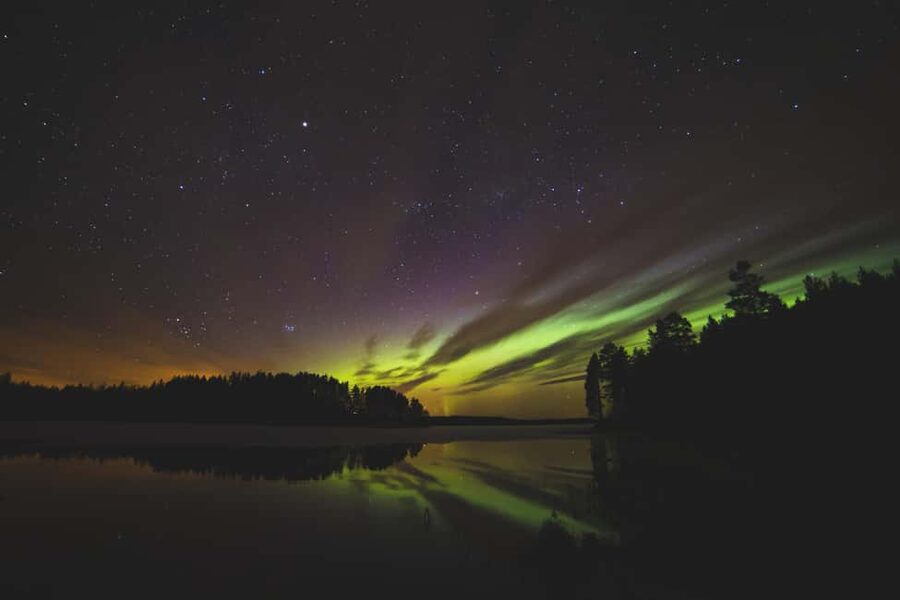
This is best for someone comfortable with an active outdoor excursion, not someone seeking a passive sightseeing trip. You do not need to be an advanced skater, and the activity is described as suitable for beginners as well as people with some skating experience.
Beginners should expect a learning curve. Natural ice is not the same as a smooth rink, and the poles, winter layers, and open setting change how you move. The guide can help individually, but you should be ready to spend part of the first lap finding your balance.
If you already enjoy skating, you will probably appreciate the freedom after the first lap. You can choose how many circuits to make and how much time to spend skating compared with sitting by the fire.
I would not choose this activity if you dislike cold weather, dislike physical exertion, or want a guaranteed sightseeing result. I would choose it for a small group of friends, couples, solo visitors who enjoy meeting a few people, and families with older children who can handle an active winter outing. The supplied information does not specify a minimum age, so check that point before booking for children.
How the $154 price measures up
At $154 per person, this is not a cheap add-on. It is priced as a full guided outdoor experience, not as a simple skate rental.
The package includes round-trip minibus transport, an English-speaking professional guide, skates and boots, safety equipment, a dry bag, a warm meal, hot drinks, and Swedish fika. The guide also handles the ice assessment and route planning, which is a major part of the value.
The price makes more sense if you want natural ice rather than a city rink. It also makes more sense if you would otherwise need to rent equipment, find a lake, and arrange transport. The small group is another reason to pay more. You get more personal attention than you would on a large coach excursion.
The price makes less sense if your main aim is simply to skate for an hour. For that, a rink would be cheaper and more predictable. This tour is worth considering when you want the whole winter evening: the ride out, the torchlit course, the fire, the food, and the chance of an extraordinary sky.
What to wear and bring for a warm evening
Your clothing can make or break the outing. Wear several breathable layers, ideally wool or polyester, and avoid cotton when possible. Cotton holds moisture and can feel cold during the rest period.
Bring:
- Warm gloves
- A hat
- Wool or quick-drying socks
- A spare warm layer for the campfire break
- Personal winter clothing suitable for several hours outside
The provider supplies the technical equipment, but not clothing. You do not need to bring a special backpack because a backpack and dry bag are included, though you should keep personal items compact.
Wear clothes that let you bend your knees and move your arms. Skating requires more movement than simply walking around a winter city, and bulky clothing can make balance harder.
Booking details that matter
The outing lasts 3.5 hours, and starting times vary, so check the available departure when booking. The live guide speaks English, and the group is limited to eight participants.
You can cancel up to 24 hours before departure for a full refund. You can also reserve now and pay later, which helps if your Stockholm schedule is still changing.
The meeting point is central enough to reach by metro or commuter rail, but the actual skating location is outside the city center. Plan for the walk to the meeting point, the minibus transfer, the outdoor activity, and the return trip when arranging dinner or another evening event.
Should you book the torchlit skating tour?
Book it if you want a distinctly Swedish winter experience that combines sport, open air, a campfire, and simple outdoor food. The best reasons are the natural ice, the small group, the freedom to skate at your own pace, and the practical gear supplied.
Book it with realistic expectations about the weather. You are not buying a Northern Lights guarantee, and you are not guaranteed to skate if the ice is unsafe. You are buying a well-planned attempt to find good conditions, with a winter hike or refund as the backup.
I would choose this over an ordinary rink session if you have 3.5 hours to spare and enjoy active outings. If skating is your only priority, look at the longer natural-ice day trip with lunch and fika instead. You can also combine the two for different versions of the sport: an evening of fire and sky, plus a daytime outing focused more closely on the ice.
FAQ
Where does the tour meet in Stockholm?
The meeting point is a 10-minute walk from Skanstull metro station on the green line and Mariatorget metro station on the red line. It is also an eight-minute walk from Stockholm Södra commuter rail station.
How long does the experience last?
The tour lasts 3.5 hours, including transport between the meeting point and the lake or lakes.
Is transportation included?
Yes. Round-trip minibus transportation from the meeting point to the skating location is included.
What equipment is provided?
You receive skates and boots, poles, ice picks, a backpack, a helmet, knee pads, elbow pads, and a dry bag for personal belongings.
What clothing should I bring?
You must bring your own winter clothing, gloves, hat, and socks. Breathable layers that dry quickly are recommended, with wool and polyester preferred over cotton. Bring an extra layer for the break.
Are the Northern Lights guaranteed?
No. The Northern Lights, clear skies, and a bright moon are not guaranteed. The guide chooses the location with the best current forecast.
What happens if the ice is unsafe?
The provider will try to arrange an alternative activity, most likely a winter hike, with your approval. If the alternative does not suit you, a refund is offered.
Fresh aurora departures around Sweden
- Sälen: Northern Lights Snowshoe Adventure with Pickup★ 3.9 · 5 reviews
- Luleå: Snowmobile Adventures & Northern Lights Hunt★ 4.8 · 13 reviews
- Luleå: Sami Culture, Reindeer, and Northern Lights Tour★ 4.8 · 6 reviews
- Luleå: Northern Lights Snowshoeing Tour★ 4.7 · 3 reviews
- Kiruna: Private Northern Lights Chase★ 5.0 · 4 reviews
- Kiruna: Snowshoe Trek with Aurora Hunt and Warm Beverage★ 4.5 · 20 reviews
- Kiruna: Northern Lights Minivan Chase with Warm Drink★ 4.8 · 4 reviews
- Kiruna: Northern Lights Chase with Car★ 4.6 · 23 reviews
Sweden Northern Lights Tours, compared.
Northern Lights Tour from Kiruna to Abisko with Dinner
Read our review →
Sami-Inspired BBQ Dinner with Northern Lights Chase
Read our review →Browse the lists this tour appears in